How to Start a Career in Pharmacovigilance: A Beginner’s Guide
Pharmacovigilance has become one of the most sought‑after career paths in the pharmaceutical and healthcare industry. As awareness around drug safety continues to grow, companies across the globe are actively looking for trained professionals who can monitor, analyze, and report adverse drug reactions effectively.
If you are a student or fresher from a pharmacy, life sciences, or medical background and are wondering how to start a career in pharmacovigilance, this guide will walk you through the process step by step in a simple and realistic way.
Table of Contents
What Is Pharmacovigilance?
Pharmacovigilance (often called PV or drug safety) is the science of detecting, assessing, understanding, and preventing adverse effects or any other drug‑related problems.
In simple terms, pharmacovigilance ensures that medicines available in the market are:
- Safe for patients
- Used correctly
- Monitored continuously after approval
Pharmacovigilance professionals work behind the scenes to protect patient safety and support regulatory compliance.
Who Can Start a Career in Pharmacovigilance?
Pharmacovigilance is open to candidates from multiple educational backgrounds. You can consider this field if you have completed or are pursuing:
- B.Pharm or M.Pharm
- B.Sc / M.Sc in Life Sciences
- MBBS, BDS, or Nursing
- Biotechnology or related healthcare disciplines
Freshers and candidates with 0–2 years of experience are highly suitable for entry‑level pharmacovigilance roles.
Why Choose Pharmacovigilance as a Career?
There are several reasons why pharmacovigilance is an attractive career option:
- High demand across global pharmaceutical companies and CROs
- Strong focus on patient safety
- Opportunities to work on international projects
- Structured career growth
- Suitable for both freshers and experienced professionals
- Option for remote or hybrid work in many organizations
Pharmacovigilance is also less field‑based and more process‑oriented, making it ideal for candidates who prefer analytical and documentation‑focused roles.
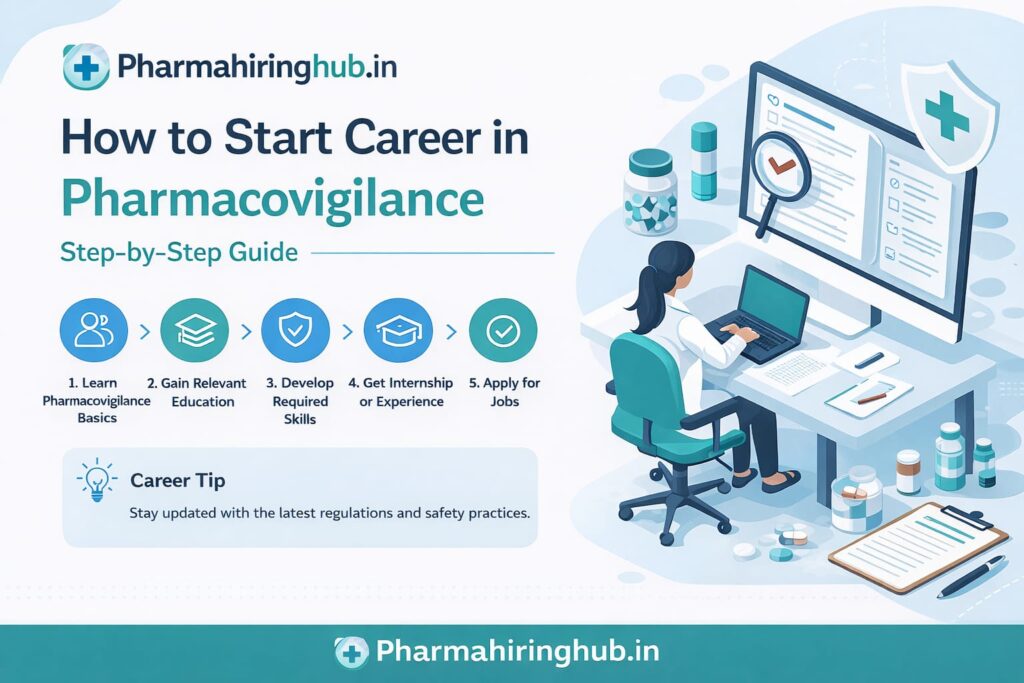
Step‑by‑Step Guide to Start a Career in Pharmacovigilance
1. Understand the Basics of Pharmacovigilance
Before entering this field, it is important to understand basic concepts such as:
- What is an adverse event (AE)?
- What is a serious adverse event (SAE)?
- What is an Individual Case Safety Report (ICSR)?
- Role of pharmacovigilance in drug development and post‑marketing
You do not need expert‑level knowledge in the beginning, but clarity on core concepts is essential.
2. Learn Key Pharmacovigilance Processes
Entry‑level pharmacovigilance roles generally involve:
- Case intake and processing
- Adverse event reporting
- Narrative writing
- Medical coding using MedDRA
- Follow‑up activities
- Compliance with regulatory timelines
Understanding how safety cases are handled from intake to submission will make interviews much easier.
3. Get Training in Pharmacovigilance (Optional but Helpful)
While not mandatory, formal pharmacovigilance training gives you an advantage over other freshers. Training programs often cover:
- PV regulations and guidelines
- Case processing workflows
- Argus safety database overview
- ICSR lifecycle
- Regulatory reporting basics
Training shows recruiters that you are job‑ready and serious about the field.
4. Learn About Safety Databases
Most pharmacovigilance roles use safety databases such as:
- Argus Safety
- ARISg
- VigiFlow
Basic exposure or theoretical knowledge of these systems is often expected at entry‑level. Even if you don’t have hands‑on experience, understanding their purpose and workflow is helpful.
5. Build the Right Skill Set
Successful pharmacovigilance professionals typically have:
- Strong attention to detail
- Good written and verbal communication
- Ability to follow SOPs and guidelines
- Time management and prioritization skills
- Basic proficiency in Microsoft Word and Excel
These skills are often valued more than technical expertise at fresher level.
6. Create a Pharmacovigilance‑Focused Resume
Your resume should highlight:
- Educational background
- Pharmacovigilance training (if any)
- Knowledge of drug safety concepts
- Familiarity with Argus or MedDRA
- Relevant skills such as documentation and communication
Avoid adding fake experience. Recruiters prefer honest and well‑structured resumes.
You Can check article on How to Write a Resume for Freshers: Step‑by‑Step Guide With Example
7. Apply for Entry‑Level Pharmacovigilance Roles
Some common fresher‑level roles include:
- Pharmacovigilance Associate
- Drug Safety Associate
- Junior Safety Associate
- PV Operations Trainee
Look for opportunities in CROs, pharmaceutical companies, and regulatory consulting firms.
8. Prepare for Pharmacovigilance Interviews
Interview questions often focus on:
- Basics of pharmacovigilance
- AE vs SAE
- ICSR lifecycle
- Importance of patient safety
- Why you want to work in pharmacovigilance
Clear understanding and confidence are more important than memorized answers.
Career Growth in Pharmacovigilance
With experience, you can grow into roles such as:
- Senior PV Associate
- Safety Scientist
- Case Processing Lead
- PV Team Lead or Manager
- Regulatory Affairs roles
Pharmacovigilance also opens doors to global career opportunities.
Final Thoughts
Starting a career in pharmacovigilance does not require years of experience, but it does require clarity, preparation, and the right mindset. With basic knowledge, relevant skills, and continuous learning, freshers can successfully enter and grow in this field.
If you are looking for a stable, meaningful, and globally relevant career in healthcare, pharmacovigilance is definitely worth considering.
Fresher Job: Accenture hiring for PV Services associate
Frequently Asked Questions (FAQ) – Pharmacovigilance Career Guide
1. What is pharmacovigilance in simple terms?
Pharmacovigilance is the process of monitoring the safety of medicines after they are approved and used by patients. It focuses on identifying, assessing, and reporting adverse drug reactions to ensure patient safety and regulatory compliance.
2. Who can start a career in pharmacovigilance?
Candidates from Pharmacy, Life Sciences, Medicine, Nursing, Biotechnology, or related healthcare backgrounds can start a career in pharmacovigilance. Freshers and candidates with 0–2 years of experience are commonly hired for entry‑level roles.
3. Is pharmacovigilance a good career option for freshers?
Yes. Pharmacovigilance is one of the most suitable career paths for freshers because it offers structured training, clear processes, and strong demand across pharmaceutical companies and CROs. Many organizations hire fresh graduates for junior drug safety roles.
4. Do I need experience to work in pharmacovigilance?
Prior industry experience is not mandatory. A good understanding of pharmacovigilance basics, along with relevant training or coursework, is often sufficient for entry‑level positions. Employers value clarity of concepts and willingness to learn.
5. Is pharmacovigilance training mandatory?
Training is not always mandatory, but it is highly beneficial. Pharmacovigilance training helps candidates understand real‑world case processing, regulatory requirements, and safety databases, which improves job readiness and interview performance.
6. What skills are important to succeed in pharmacovigilance?
Key skills include:
Attention to detail
Good written and verbal communication
Analytical thinking
Ability to follow SOPs and timelines
Basic computer and documentation skills
7. What kind of roles are available for beginners in pharmacovigilance?
Common entry‑level roles include:
Pharmacovigilance Associate
Drug Safety Associate
Junior Safety Analyst
PV Operations Trainee
These roles focus on case intake, data entry, follow‑ups, and safety report processing.
8. Does pharmacovigilance offer long‑term career growth?
Yes. With experience, professionals can grow into senior roles such as Senior PV Associate, Safety Scientist, Team Lead, Manager, or transition into regulatory affairs and global safety roles.
9. Is pharmacovigilance limited to India, or are there global opportunities?
Pharmacovigilance follows global regulatory standards, which makes the experience internationally relevant. Professionals often work on global projects and have opportunities with multinational companies and international teams.
10. Can pharmacovigilance roles offer remote or hybrid work options?
Yes. Many pharmacovigilance roles now offer remote or hybrid work options, especially within CROs and global pharmaceutical organizations, depending on company policy and role requirements.
📢 Get Daily Pharma Job Alerts
Join our Telegram channel for instant updates on pharma, government & fresher jobs.
Join Telegram Now